Vornaxis
Artificial intelligence is moving from experimental software into physical infrastructure. In 2024, 78% of organizations reported using AI, according to Stanford University’s AI Index Report 2025. Private generative AI investment also reached $33.9 billion. These figures suggest stronger demand for high-density computing, but demand alone does not prove manufacturing quality.
This guide examines 10 leading AI server manufacturing companies in 2026. The evaluation considers GPU integration, advanced networking, memory bandwidth, thermal engineering, and production scalability. It also considers practical service factors, including firmware support, replacement procedures, rack-level testing, and regional supply capacity. An effective ai server manufacturing company must deliver more than powerful components. It must keep systems stable when thousands of accelerators operate continuously.
The stakes are high. The International Energy Agency’s Energy and AI report estimates that data-center electricity consumption could more than double by 2030, reaching roughly 945 terawatt-hours annually. Cooling design therefore matters as much as processing speed. Direct liquid cooling, efficient power delivery, and measurable performance per watt deserve close attention. Gartner and IDC research also show that buyers increasingly evaluate infrastructure as a long-term platform, not a one-time hardware purchase.
No ranking is flawless. Vendor disclosures differ, and regional availability can change quickly. Some companies excel in custom engineering but lack global support. Others offer broad distribution but provide limited transparency about component sourcing. This introduction frames the comparison carefully, using public reports, technical evidence, and practical buyer considerations rather than marketing claims. Numbers need context. Performance needs verification.
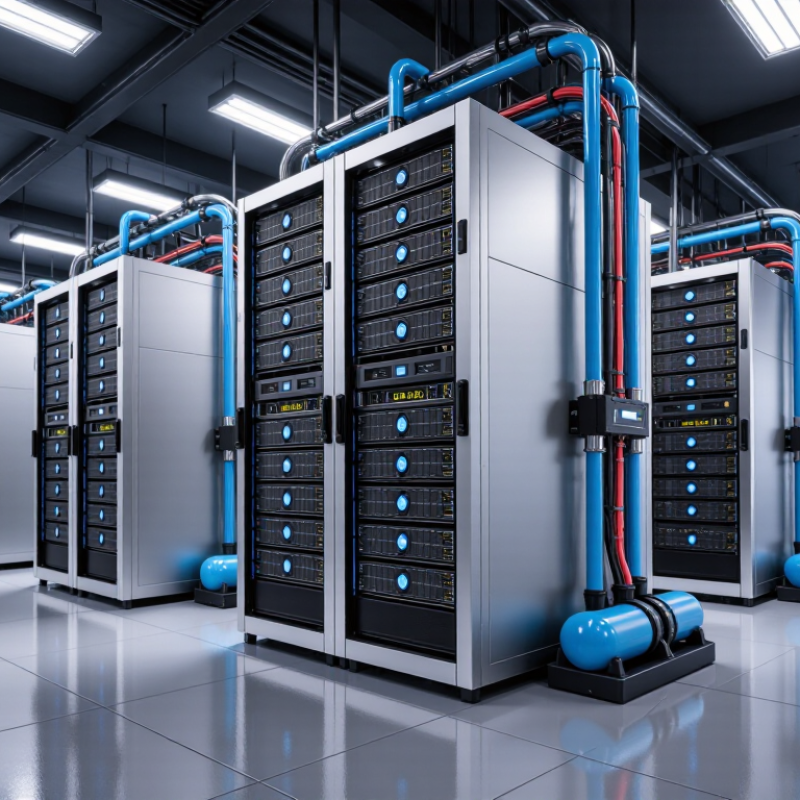
AI server manufacturing is the process of designing, assembling, testing, and supporting computing systems built for artificial intelligence workloads. These systems handle model training, inference, simulation, and large-scale data processing. Unlike conventional servers, they prioritize parallel computation, rapid data movement, and controlled heat.
Core components include CPUs, AI accelerators, high-bandwidth memory, storage drives, network adapters, power supplies, and rack chassis.
Cooling is equally important. Technicians may inspect airflow paths, thermal sensors, liquid-cooling connections, and cable routing before deployment.
Firmware and management software also matter because operators need accurate health data during demanding workloads. Small failures can cause costly interruptions.
Manufacturers influence the market by integrating these parts into reliable, serviceable platforms. They validate systems through stress tests, burn-in cycles, power checks, and performance measurements. A well-built rack should remain stable under sustained computational load, not only during a short demonstration.
However, the definition of an AI server is still imperfect. Some general-purpose systems now support AI efficiently, while specialized systems may serve ordinary enterprise tasks. This boundary deserves careful evaluation.
Buyers should compare workload fit, energy use, upgrade paths, maintenance access, and measured performance rather than rely on labels alone. At the factory floor, practical details often decide reliability: a loose connector, uneven cooling, or incomplete diagnostic record can matter more than impressive specifications.
Choosing among the 10 Best AI Server Manufacturing Companies in 2026 requires more than comparing processor counts. Serious evaluation begins with workload evidence. Manufacturers should show repeatable training and inference results, not selected laboratory wins. Reviewers should examine accelerator utilization, memory bandwidth, networking latency, and cooling performance under sustained loads.
Operational experience matters. A server may perform well for one hour, then throttle inside a crowded rack. Measure power draw, fan noise, thermal stability, and recovery after component failure. Check firmware controls, security updates, documentation, and repair procedures.
Reliable manufacturers provide clear test methods and realistic support timelines. Compliance with applicable safety, privacy, and environmental requirements also strengthens trust. Still, no scorecard is perfect. Weighting may favor large enterprises and overlook smaller research teams.
Tips: Request full benchmark logs. Test your workload. Inspect service terms.
Manufacturers should also be judged across the system’s working life. Look for modular parts, predictable replacement cycles, spare-component access, and tools that monitor aging hardware. Supply continuity deserves attention, especially when demand changes quickly. Claims about energy efficiency need context, because performance per watt can vary by model, software, and workload. Independent validation is useful, but even it can contain blind spots. A careful buyer records assumptions, repeats critical tests, and treats impressive specifications as questions rather than proof. Fresh evidence matters.
are competing through efficiency, service, and dependable engineering. Their systems commonly support eight or more accelerator cards, high-speed interconnects, and dense memory configurations. Strong manufacturers also design airflow paths around real rack conditions, not only laboratory benchmarks. Liquid cooling is becoming more practical for large training clusters. However, installation complexity still worries smaller data centers.
A careful buyer should examine sustained performance, power draw, firmware updates, and repair access. A server that performs well for ten minutes may throttle during overnight workloads. Warranty response also matters when one failed node delays an entire project. The ten leading companies differ in customization, delivery speed, and technical support. No ranking remains permanent. I would also question impressive claims without independent thermal and workload testing.
Tips: Compare performance per watt, not peak speed alone. Request a sample configuration with actual model workloads. Check noise levels, rack depth, cable clearance, and cooling requirements. Ask how quickly replacement parts arrive. Review security controls for remote management. Finally, leave power and cooling headroom; early estimates are often too optimistic.
The best AI server manufacturers in 2026 compete through architecture, not glossy specifications. TrendForce forecasts AI server shipments will grow about 28% in 2025, increasing pressure on power, cooling, and supply chains. Leading builders therefore combine accelerator modules, high-bandwidth memory, and rack-scale design. Their strongest systems support dense training workloads while preserving serviceability. That matters in real data centers.
Liquid cooling is becoming a practical advantage. Direct-to-chip systems can remove heat more efficiently than traditional air cooling, especially in racks exceeding 30 kilowatts. The Uptime Institute’s 2024 survey identified power availability as a major data-center constraint. Manufacturers now offer rear-door heat exchangers, coolant distribution units, and stronger thermal monitoring. Small details matter, such as quick-disconnect fittings and accessible pump controls.
Networking is equally important. Modern AI platforms often use 400Gbps or faster interconnects to reduce communication delays between accelerators. Omdia’s market research highlights rapid growth in high-speed data-center networking for AI clusters. Storage designs also use NVMe flash and parallel data paths, preventing training jobs from waiting on files. Promising specifications can still disappoint. Firmware maturity, repair access, and workload testing deserve more attention. Procurement teams should request independent benchmarks, power measurements, and failure-recovery results before selecting a manufacturer.
Technology bandwidth benchmarks used to compare leading AI server manufacturers without displaying company or brand data.
Values show approximate maximum one-way bandwidth in Gb/s based on published interface and memory specifications. PCIe and CXL figures represent x16 links, Ethernet figures represent link rates, and HBM figures represent one memory stack. Actual server performance depends on topology, software, cooling, power delivery, and workload optimization.
Choosing the right AI server manufacturer begins with the workload, not the product brochure. Large model training needs dense accelerator capacity, high-speed networking, and expandable liquid or air cooling. A manufacturer should provide measured performance under sustained load, not only peak benchmark results. Ask for power figures, rack density, memory bandwidth, and replacement procedures. These details affect operating costs within weeks.
Inference workloads require a different balance. A hospital-facing system may need low latency, strong data protection, and predictable maintenance windows. A factory deployment may value compact servers, dust resistance, and remote monitoring more than maximum accelerator count. For these cases, assess firmware controls, hardware encryption, diagnostic tools, and support coverage near each operating site. Test response times with your own models. Generic benchmarks can mislead.
Reliability deserves practical scrutiny. Request failure-rate data, spare-part availability, warranty terms, and documented escalation paths. Review how the manufacturer handles thermal alarms, failed drives, and software compatibility after updates. A pilot installation can reveal cable access, fan noise, and real cooling behavior. No scorecard is perfect. My own evaluations sometimes overvalue performance and undervalue technician response time. That mistake becomes expensive at scale. Choose a manufacturer that explains limitations clearly, supports repeatable acceptance testing, and can adapt configurations as model sizes, energy rules, and deployment locations change.
It involves designing, assembling, testing, and supporting servers for artificial intelligence workloads. These systems handle training, inference, simulation, and large-scale data processing.
AI servers prioritize parallel computing, rapid data movement, and controlled heat. They often use accelerators, high-bandwidth memory, and faster networking.
Core parts include CPUs, accelerators, memory, storage drives, network adapters, power supplies, and rack chassis. Cooling and management software are also essential.
Dense workloads create substantial heat inside the rack. Direct-to-chip liquid cooling can perform better than air cooling above 30 kilowatts.
Modern systems may use 400Gbps or faster interconnects. Faster links reduce communication delays between accelerators during distributed processing.
They use stress tests, burn-in cycles, power checks, and performance measurements. Testing should include sustained workloads, not only short demonstrations.
A loose connector, uneven airflow, or poor cable routing can interrupt operations. Incomplete diagnostic records may also slow repairs.
Compare workload fit, energy use, upgrade paths, maintenance access, and measured performance. Request independent benchmarks and power measurements.
Not necessarily. Some general-purpose systems now support AI efficiently, while specialized systems may serve ordinary enterprise tasks.
Review firmware maturity, repair access, cooling connections, and failure-recovery results. A quick-disconnect fitting can matter during maintenance.
This article explores the role of AI server manufacturing in 2026, explaining how specialized servers support machine learning, deep learning, data analytics, and other demanding workloads. It introduces the essential components of an AI server, including processors, accelerators, high-speed memory, storage, networking systems, cooling solutions, and power infrastructure. The discussion also explains how an ai server manufacturing company is evaluated through performance, scalability, energy efficiency, reliability, customization, software compatibility, security, and long-term support.
The article then presents ten leading categories of AI server manufacturers based on innovation, engineering capability, production quality, and market contribution, without focusing on specific brand names. It compares their technology strengths, such as accelerated computing, modular architectures, liquid cooling, dense deployment, and cloud-ready integration. Finally, it provides practical guidance for selecting a suitable manufacturer according to different needs, including research, enterprise deployment, data centers, edge computing, and cost-sensitive projects.
