China’s industrial AI server market is expanding beyond conventional data centers. Manufacturers now design systems for factory floors, energy sites, transport hubs, and research laboratories. These environments demand more than high computing power. They require stable inference, efficient cooling, strong connectivity, and dependable service.
This guide examines ten leading Chinese companies associated with industrial AI server development. Each candidate is assessed through practical criteria, including GPU and CPU options, rack or edge configurations, thermal management, operating reliability, software compatibility, and technical support. A useful industrial ai server manufacturer should handle continuous workloads, changing temperatures, dust, vibration, and strict deployment schedules. In a production line, a delayed vision model can stop inspection within seconds.
Real-world experience matters. Product pages alone cannot prove long-term reliability. Customer deployments, published specifications, certification records, and service coverage offer stronger evidence. Still, public information is sometimes incomplete. Rankings may change as new accelerators, partnerships, and regional projects appear. That uncertainty deserves attention.
The companies discussed here represent different strengths. Some focus on high-density GPU clusters. Others develop compact edge servers for near-machine processing. Several combine hardware with cloud platforms, AI software, or industrial integration. Readers should compare power consumption, expansion space, warranty terms, and local support before choosing a supplier. A powerful server is not always the best factory server. Practical fit matters more.
Industrial AI Servers: Definition, Architecture, and Core Functions
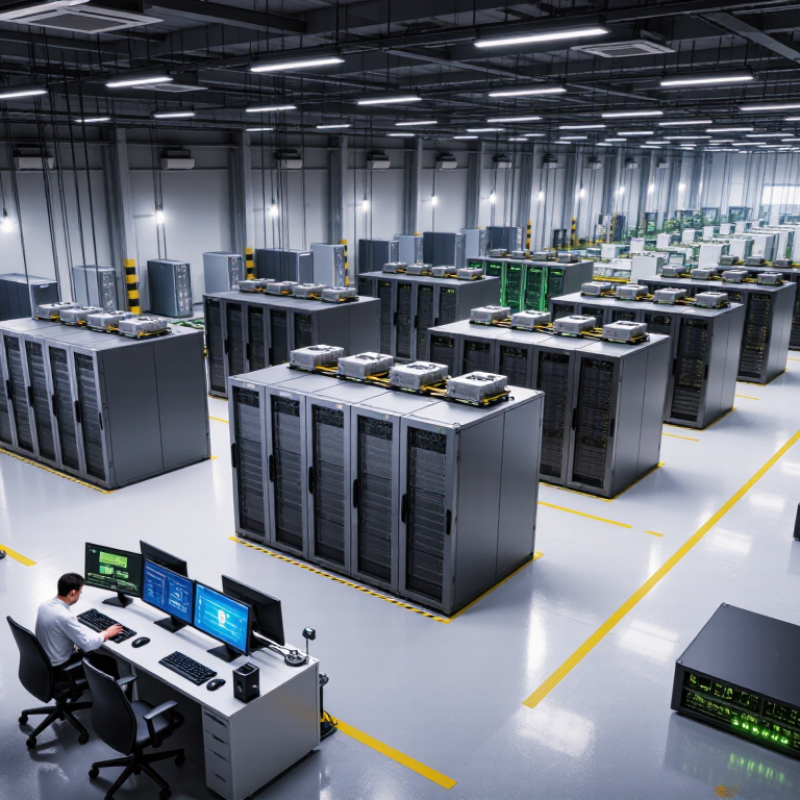
Industrial AI servers are purpose-built computing systems for factories, warehouses, energy sites, and other demanding environments. They combine CPUs, GPUs, memory, storage, networking, and industrial control interfaces. Unlike ordinary servers, they must handle vibration, dust, temperature changes, and continuous operation.
Their architecture usually has three layers. The edge layer collects camera, sensor, and machine data near production equipment. The computing layer runs inspection models, predictive maintenance, digital twins, and process optimization. The management layer controls security, model updates, workload scheduling, and remote monitoring. Low-latency inference matters. A delayed decision can stop a production line.
The Stanford AI Index 2024 reported 25.2 billion dollars in private generative AI investment during 2023, showing strong demand for accelerated computing. However, industrial value depends on reliability, not only model size. The International Energy Agency estimated that data centers consumed about 460 terawatt-hours globally in 2022. Their electricity demand could more than double by 2026. This makes efficient cooling, power monitoring, and workload placement essential. In practical testing, a server may deliver excellent benchmark results but fail under dust or thermal stress. That weakness is often overlooked. A useful architecture therefore includes redundant power, error correction, secure boot, and explainable alerts. Perfect automation remains unrealistic. Operators still need clear evidence before changing a physical process.
How to Evaluate China’s Industrial AI Server Manufacturers
Choosing China’s top ten industrial AI server manufacturers requires more than comparing processor brands or online rankings.
Start with the workload. A vision inspection line may need fast GPU inference, while predictive maintenance often prioritizes stable CPU performance and storage capacity. Ask manufacturers for measured results using your models, image sizes, and operating temperatures.
Generic benchmark charts can mislead.
Factory experience shows that thermal design often decides long-term reliability.
Inspect airflow paths, fan control, dust protection, and vibration resistance. Request burn-in records, failure-rate data, and component traceability. Check whether the supplier tests every system or only selected units.
Small details matter. A loose cable can stop a production cell.
Evaluate technical support with practical questions.
Can engineers diagnose a remote fault quickly? Are spare parts stocked locally? Does the warranty cover industrial operating conditions? Review system security, firmware update procedures, and compliance documents for your target market. Certification alone is not proof of dependable engineering. Visit the assembly site when possible, and compare documented processes with actual practices. Some suppliers may offer impressive customization but weak after-sales support. That risk deserves attention.
A realistic evaluation should score performance, reliability, service, delivery stability, and total ownership cost separately. The cheapest quotation may become expensive after repeated downtime.
Be cautious with perfect promises.
Test a pilot unit under real production pressure before approving a larger purchase.
China’s Top 10 Industrial AI Server Manufacturers
China’s Top 10 Industrial AI Server Manufacturers
China’s top ten industrial AI server manufacturers compete through computing density, thermal control, and dependable field service. Their systems support factory vision, predictive maintenance, robotics, and digital twins. IDC’s 2024 Worldwide AI and Generative AI Spending Guide projected global AI infrastructure spending near 154 billion dollars in 2024. China remains a major contributor, driven by manufacturing upgrades and data-center investment.
The leading manufacturers typically offer GPU servers, edge systems, liquid cooling, and domestic supply-chain options. Selection should examine inference latency, rack power, operating temperature, and long-term spare-part availability. Omdia reports that accelerated computing is expanding across enterprise and industrial workloads, not only research centers. That matters on factory floors. A server that performs well in a laboratory may fail beside dust, vibration, and unstable network links.
The ranking is not perfectly stable. Procurement results change with processor access, software compatibility, and regional service capacity. Gartner has repeatedly emphasized infrastructure readiness as a foundation for reliable AI deployment. Buyers should test complete systems with real production data, rather than trust peak benchmark scores. One overlooked issue is maintenance training. It can quietly determine uptime. The strongest manufacturers combine hardware engineering, model optimization, remote monitoring, and responsive local support, though few deliver every capability equally well.
Key Technologies and Industrial Applications of AI Servers
China’s top ten industrial AI server manufacturers should be judged by engineering depth, not shipment volume alone. Modern systems combine accelerator cards, high-bandwidth memory, liquid cooling, and secure orchestration software. The Stanford AI Index 2025 reports that AI hardware costs continue to shape deployment decisions, especially for large models. In a factory, this means balancing inference speed with maintenance cost. A dusty control room needs sealed airflow paths, replaceable filters, and clear thermal alarms. Small details matter.
Industrial servers now support visual inspection, predictive maintenance, digital twins, robotics, and process optimization. The International Energy Agency estimates that data-center electricity use could approach 945 TWh globally by 2030. This makes energy efficiency a core technology requirement, not a marketing phrase. Manufacturers need efficient power supplies, dynamic workload scheduling, and liquid cooling for dense computing racks. Edge servers also reduce latency by processing sensor data near production lines. Under five milliseconds can matter.
Reliable deployment requires more than benchmark scores. Buyers should examine model compatibility, cybersecurity updates, remote diagnostics, and long-term spare-part access. The MLCommons MLPerf benchmarks offer useful performance comparisons, but factory conditions rarely match laboratory tests. That gap deserves attention. A server may perform well in a clean test room, yet struggle beside vibration, heat, and unstable network links. Industrial validation should include failure recovery, data isolation, and continuous operation under realistic loads. Some specifications remain difficult to verify. Independent testing is still essential.
How to Choose the Right Industrial AI Server Manufacturer
China Top 10 Industrial AI Server Manufacturers?
How to Choose the Right Industrial AI Server Manufacturer
Choosing an industrial AI server manufacturer requires more than comparing processor counts. Gartner forecasts worldwide AI spending will reach 632 billion dollars by 2028. That growth increases pressure on factories to buy quickly. Speed can create expensive mistakes. Ask whether the server supports your workload, including machine vision, predictive maintenance, digital twins, or robotic control. Check GPU compatibility, memory bandwidth, storage endurance, and real-time response under heat and vibration. A low benchmark score is not always a failure. It may reflect poor software tuning.
Reliability needs measurable evidence. Request failure-rate data, burn-in procedures, thermal test results, and replacement timelines. The Uptime Institute’s Global Data Center Survey repeatedly identifies power and cooling as major operational risks. Industrial sites face harsher conditions than ordinary offices. Therefore, verify operating temperature ranges, redundant power options, remote monitoring, and local service coverage. Ask for a test unit before signing a large order. Short trials reveal noise, cable access, boot delays, and maintenance problems. They also expose assumptions.
Security deserves equal attention. Review firmware controls, secure boot, update policies, and vulnerability response procedures. Require clear documentation and traceable component sourcing. IDC’s AI infrastructure research shows rapid investment growth, but market forecasts use different definitions. Compare the methodology, not only the headline number. A manufacturer with impressive specifications may still lack engineers near your facility. That gap matters. Procurement teams should score total ownership cost, energy use, warranty terms, and integration time. The perfect supplier does not exist; even a strong shortlist needs technical review.
FAQS
It is a computing system designed for factories, warehouses, and energy facilities. It combines processors, accelerators, memory, storage, networking, and control interfaces. It must operate through dust, vibration, and temperature changes.
Its architecture commonly includes edge, computing, and management layers. The edge layer gathers camera, sensor, and machine data near equipment. The computing layer runs inspection, maintenance, simulation, and optimization workloads. The management layer handles security, updates, scheduling, and remote monitoring.
Industrial decisions often affect moving equipment immediately. A delayed inspection result may allow a defective item to continue along a production line. A slow warning can also increase downtime. Speed matters, but evidence matters too.
Common applications include visual inspection, predictive maintenance, robotics, digital twins, and process optimization. A camera may detect a surface defect within seconds. Sensors can reveal unusual motor vibration before a breakdown occurs.
They may face dust, vibration, heat, cold, and unstable network connections. A server can perform well in a clean laboratory but fail beside a production machine. Field testing is essential. Benchmark scores are not enough.
They should monitor power use, choose efficient cooling, and place workloads carefully. Liquid cooling may help dense computing systems manage heat. Data-center electricity demand is rising, so energy planning cannot be an afterthought.
Useful features include redundant power, error correction, secure boot, and remote monitoring. Spare parts and trained maintenance staff also matter. Quiet failures happen. Service planning can determine real uptime.
Buyers should examine inference latency, power requirements, operating temperature, software compatibility, and local service capacity. They should test complete systems with real production data. Rankings can change when processor access or support conditions change.
No design is perfect. Operators should review clear evidence before changing a physical process. Explainable alerts help people understand unusual results. Full automation remains unrealistic in many complex environments. That assumption can fail.
Conclusion
Industrial AI servers are purpose-built computing systems designed to support demanding workloads in factories, energy facilities, transportation networks, and other industrial environments. This article explains their architecture, including processors, accelerators, memory, storage, networking, cooling, and security components, as well as core functions such as real-time data processing, machine vision, predictive maintenance, automation, and edge inference. It also introduces practical criteria for evaluating China’s industrial AI server manufacturers, including performance, reliability, environmental adaptability, customization, software compatibility, technical support, delivery capability, and total cost of ownership.
The overview presents ten representative categories of manufacturers and compares the technologies that shape modern industrial AI solutions. It discusses applications in smart manufacturing, robotics, logistics, energy management, and intelligent monitoring, while emphasizing the importance of selecting an industrial ai server manufacturer that understands specific operational requirements. Readers can use the proposed evaluation framework to match computing capacity, expansion needs, deployment conditions, data security expectations, and long-term service capabilities with their organization’s goals.
 Vornaxis
